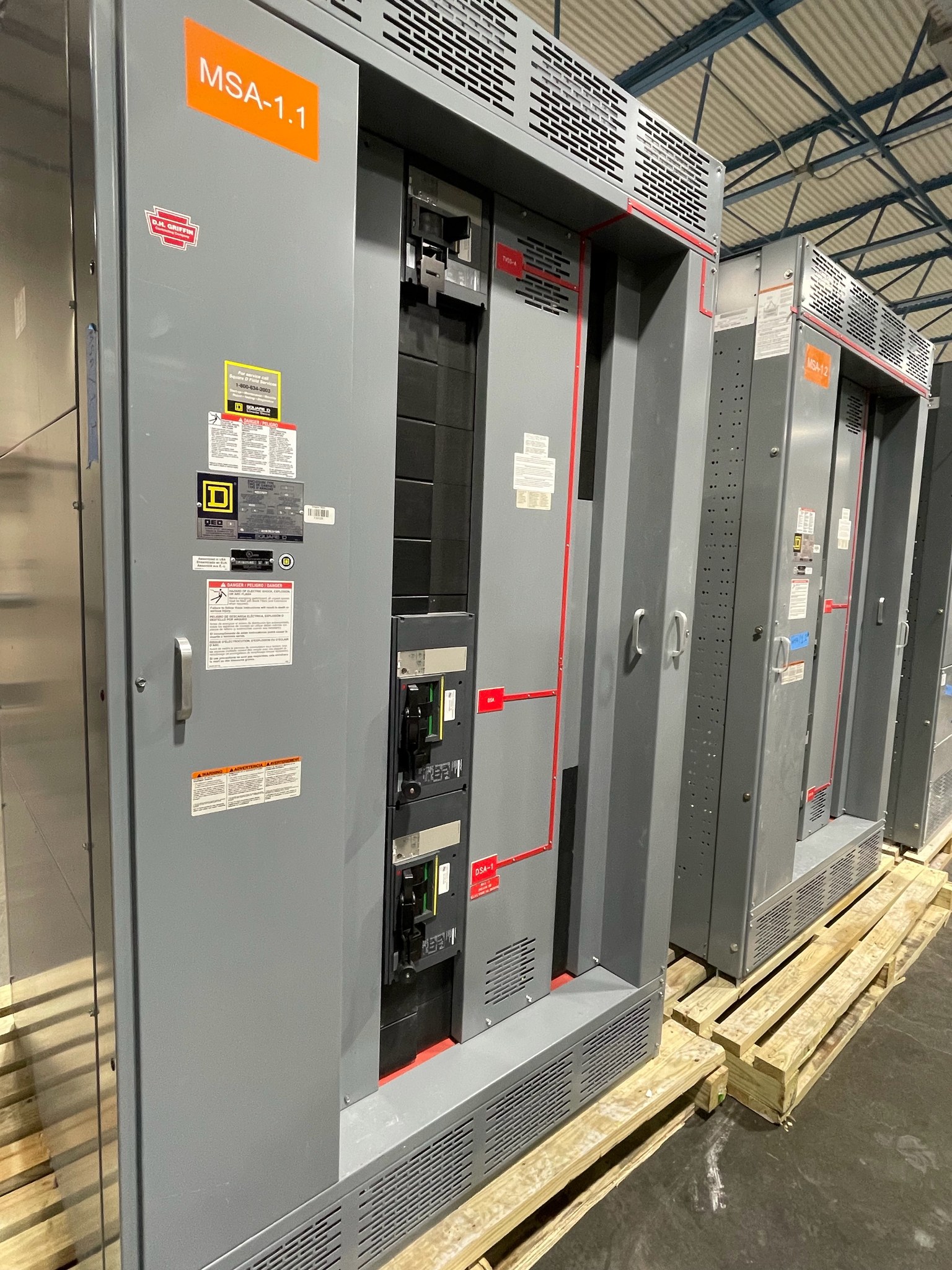
Describe used circuit breakers
Circuit breakers are protective devices used in many types of electrical equipment. Used or surplus breakers may be available individually, in lots, or as part of an installed assembly. Existing labels, inventory records, and safe exterior photographs can help identify what you have. Do not open equipment, remove a breaker, operate its handle, or access energized parts for a sale evaluation.
When the information is already available, share the manufacturer, model or catalog number, voltage and current ratings, quantity, and whether the breakers are loose or installed. Mention known damage, missing parts, or packaging. Breakers that look alike are not necessarily interchangeable, so avoid guessing at compatibility. Unknown ratings or incomplete records do not prevent you from describing the lot.
Sell breakers without testing
We consider used and surplus breakers across all voltage classes, including equipment offered with a larger switchgear or distribution lot. We provide cash offers and pay upfront. Sellers never need to energize, operate, trip, reset, or test breakers for our evaluation. Give us the information you already have, and identify any uncertainties so we can discuss the equipment accurately.
We handle crane work, rigging, disconnects, loading, freight, and hauling as appropriate for the project, including data center decommissioning and shut-down power plants. Qualified personnel perform electrical work under appropriate site procedures; the seller does not need to arrange it. Let us know whether the breakers are in storage or remain installed so we can plan the handling and access.
Build a Practical Inventory
An inventory does not need to be a formal engineering report. Start with the equipment types, approximate quantities, and locations that are already known. For example, you might identify a lineup of switchgear, several breakers, and related electrical equipment in another room. If exact counts are unavailable, an estimate or a description of the group is a useful place to begin.
Existing equipment lists, asset records, and site drawings can add context without requiring anyone to inspect or operate the gear. Tell us which records are current and which may be incomplete, and distinguish equipment available for sale from equipment that must remain. We can discuss the inventory as a whole and work through gaps in the information together.
Define What Is Included
A clear equipment scope helps everyone understand what an offer covers. Describe the switchgear and related equipment you want considered, including associated components or adjacent items when their inclusion is known. Note equipment that must remain in place or belongs to another party. Existing lists and safe overview photos can help distinguish similar-looking groups without requiring hands-on inspection.
Where the boundaries are uncertain, identify the open question instead of guessing or moving anything. We can discuss the scope before the seller decides whether to accept an upfront cash offer. The agreed scope also guides our planning for disconnects, crane and rigging work, loading, freight, and hauling, all of which we handle as part of the removal.
Describe Condition Without Guessing
Condition is useful context, but you do not have to diagnose equipment to describe it. Share observations already known from records or a safe, ordinary vantage point, such as whether gear has been stored, decommissioned, or exposed to the elements. If visible exterior damage or missing components are known, mention them rather than assuming what they mean for the equipment.
It is equally useful to say that a condition is unknown. Previous service history, age, completeness, and the reason equipment became surplus may be documented, but they are not always available. Send what you already have, and do not open equipment or investigate energized gear to fill in a blank. We can discuss the available information without asking you to test it.
Common questions
Do I need to test the equipment before requesting a quote?
No. Seller testing is not required. Send existing records or safely accessible exterior photos, and describe any unknowns. Never open, operate or touch electrical equipment merely to prepare information for an offer.
Who handles the removal and freight?
We handle all rigging and logistics, including crane, rigging, disconnects, loading, freight and hauling. Share known site access and timing details so the work can be coordinated. The seller does nothing but get paid.
What equipment and voltage classes do you buy?
We buy used, surplus and decommissioned switchgear and related electrical equipment across all voltage classes. The equipment and details of each proposed lot are discussed when you request an offer.
How do I contact the buyer?
Call (614) 715-3047, text nameplate photos to 614-715-3047, or email saleselectricalbuyers@gmail.com. You can also use the quote form on this page to provide the equipment type, location and available details.