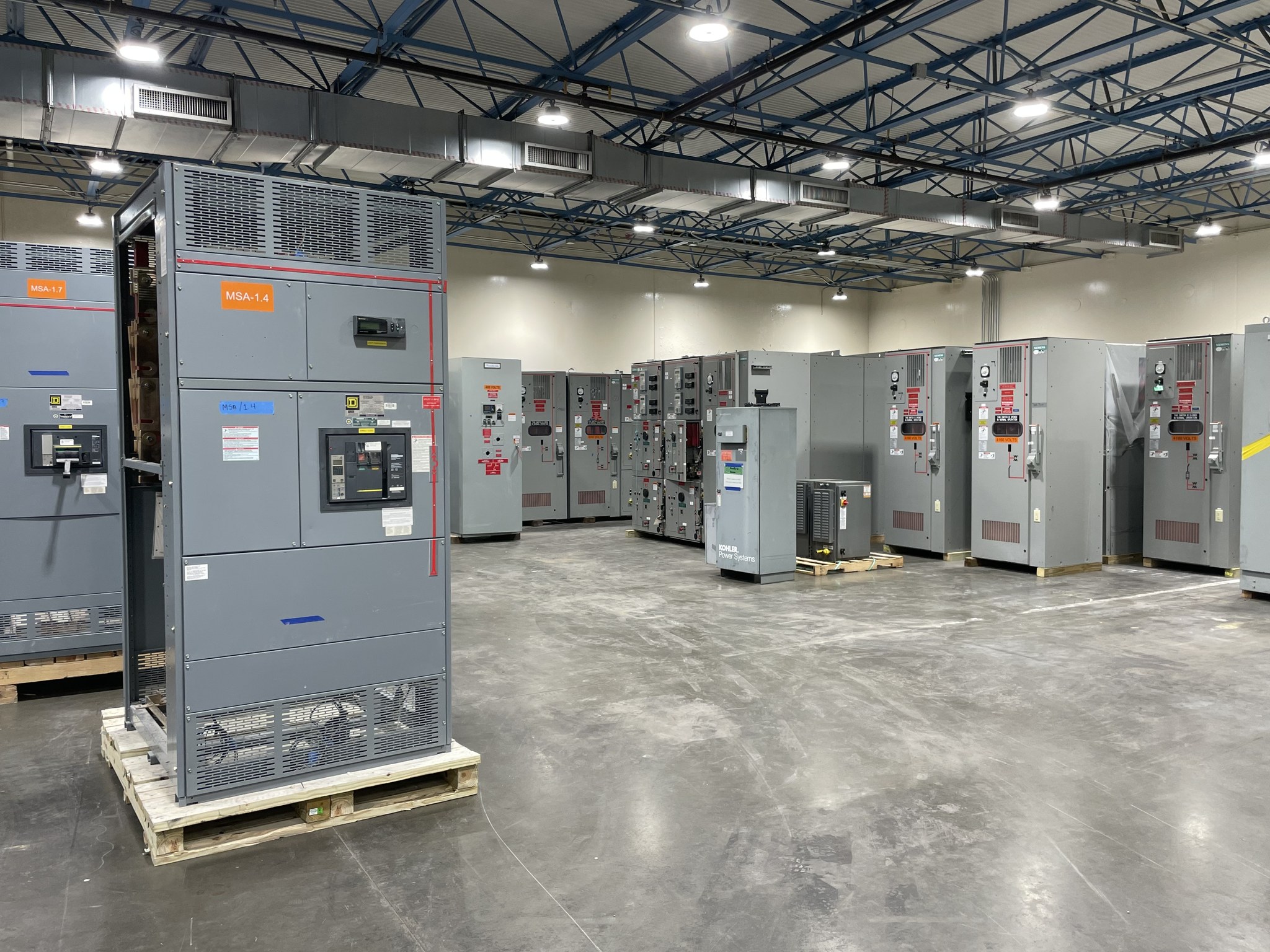
Identify surplus switchgear safely
Switchgear is equipment used to control and protect electrical power circuits. A surplus lineup may include several joined sections, circuit breakers, controls, and other components. To help us understand what you have, share any existing inventory, manufacturer information, model numbers, and photographs taken from a safe, authorized location. Do not open cabinets, touch equipment, or operate anything to prepare an evaluation.
Useful details may include the equipment's location, approximate number of sections, visible condition, and whether parts are included. Existing drawings or records can help identify voltage and current ratings, but they are not required to start a conversation. We consider used and surplus equipment across all voltage classes, including lineups removed from service and equipment still awaiting an organized shutdown.
Sell switchgear without seller testing
Tell us what you know about the switchgear and any schedule or site access limits. We provide cash offers based on the information available and pay upfront. You never need to energize, operate, or test equipment for our evaluation. If records are incomplete, tell us that rather than guessing; we can discuss the next steps and any information needed for a particular lot.
We handle crane work, rigging, disconnects, loading, freight, and hauling as part of the removal process, including projects at data centers and shut-down power plants. Electrical disconnects and other hazardous work must be performed by qualified personnel using appropriate site procedures. We coordinate the work rather than asking the seller to arrange electrical work, and removal plans account for access and site conditions.
Share Nameplate Details Safely
A clear nameplate photo can help us identify used, surplus, or decommissioned switchgear and related equipment. If a nameplate is already visible from a safe, accessible position, a photo showing its readable details is useful. Include a wider view that connects the plate to the equipment when that can also be taken safely. Existing records or older photos can be helpful alternatives.
Do not touch or open energized equipment, enter a restricted area, or take any risk to obtain a picture. If the nameplate is obscured, inaccessible, or unavailable, simply tell us what you know and let us handle the next steps. Manufacturer names, model information, or labels copied from existing documents can still give us a useful starting point.
Understand the Upfront Cash Offer
We buy equipment rather than sell it, and we provide an upfront cash offer after reviewing the available information. Descriptions, existing records, and safely obtained photos help us understand what is included. You can submit a single item or describe a larger group of used, surplus, or decommissioned switchgear and related equipment for us to review.
An offer should make the proposed equipment scope and any relevant conditions clear before you decide whether to proceed. Ask about anything that is unclear, including what items are covered and how the proposed removal relates to the transaction. There is no need to prepare equipment for a demonstration or operate it in order to start a conversation.
Discuss Timing and Site Priorities
Let us know the timing considerations that matter to your site, whether you are planning a closure, clearing surplus equipment, or coordinating with other work. Share any known access windows, preferred sequence, or date constraints, while noting which details are tentative. This context helps us discuss an appropriate plan without assuming that every site follows the same schedule.
The timing of an offer and removal depends on the information and arrangements involved, so discuss your needs before committing the equipment elsewhere. If priorities change, update us and identify any effect on access or scope. We handle all disconnects and removal logistics, including crane, rigging, loading, freight, and hauling, rather than asking the seller to schedule those services.
Common questions
Do I need to test the equipment before requesting a quote?
No. Seller testing is not required. Send existing records or safely accessible exterior photos, and describe any unknowns. Never open, operate or touch electrical equipment merely to prepare information for an offer.
Who handles the removal and freight?
We handle all rigging and logistics, including crane, rigging, disconnects, loading, freight and hauling. Share known site access and timing details so the work can be coordinated. The seller does nothing but get paid.
What equipment and voltage classes do you buy?
We buy used, surplus and decommissioned switchgear and related electrical equipment across all voltage classes. The equipment and details of each proposed lot are discussed when you request an offer.
How do I contact the buyer?
Call (614) 715-3047, text nameplate photos to 614-715-3047, or email saleselectricalbuyers@gmail.com. You can also use the quote form on this page to provide the equipment type, location and available details.